


Solar Production, Savings and ROI Calculator
Hour-by-hour PV production, bill savings and payback/ROI of PV and battery, run under Compute-to-Data.
Purpose of the Algorithm
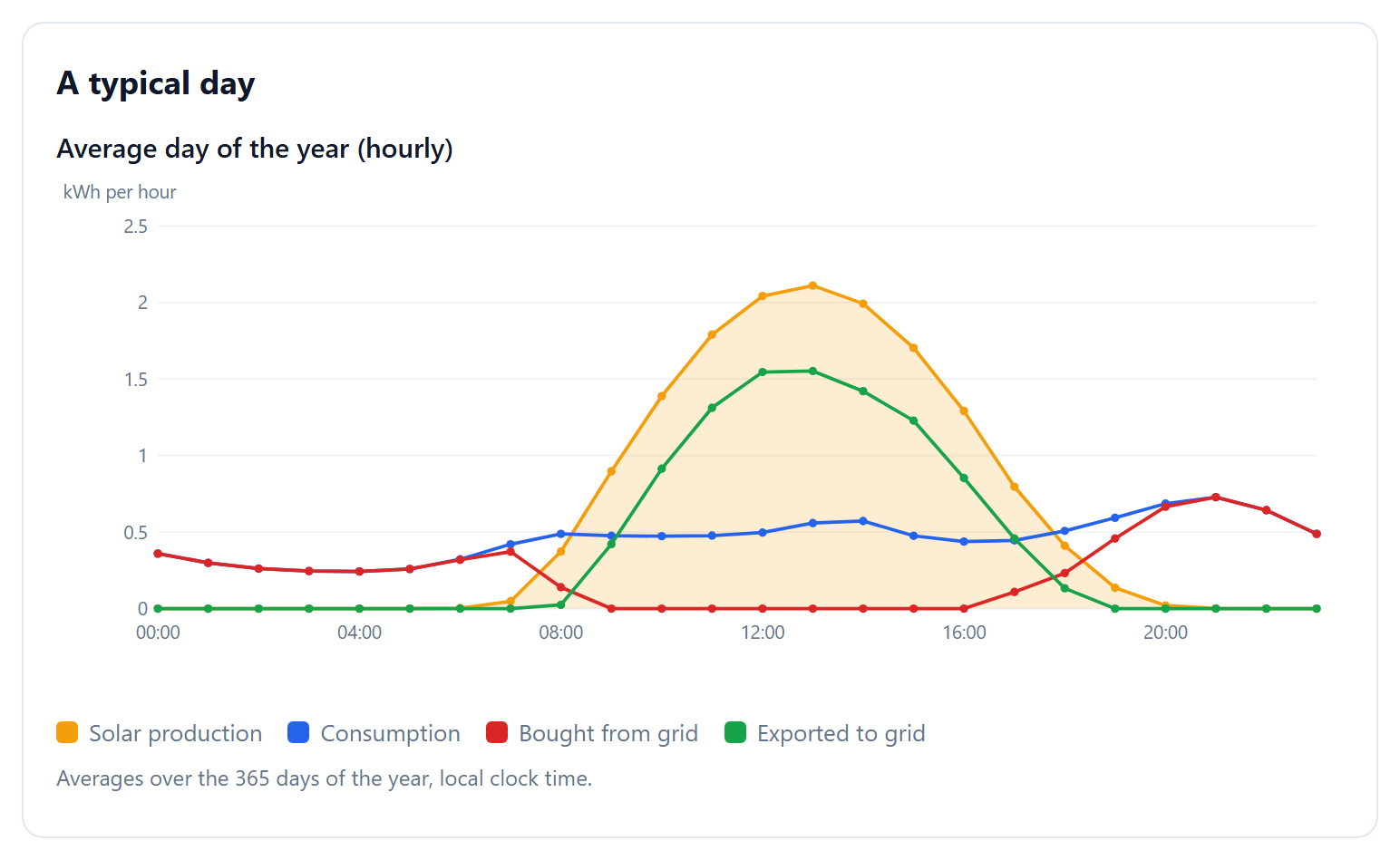
This algorithm estimates what a photovoltaic installation would produce, save and pay back at a given location. It simulates a full year of production and compares the energy bill with and without PV, for the PV system and for an optional battery.
How It Works
- Production: simulates one year of PV production hour by hour (8,760 hours) from the number of panels, panel power, tilt and orientation. It uses PVGIS irradiation data (2011–2020), interpolated at the exact coordinates.
- Energy bill: computes the bill by tariff period (2.0TD / 3.0TD), with and without PV, including the surplus compensation.
- Economics: returns the annual savings and the payback and ROI of the PV system and of an optional battery.
- Validation: production is validated against PVGIS to within ±2 %.
Input Data
The algorithm runs on a single supply point or on every supply point in a dataset. It accepts these formats:
| Format | Source |
|---|---|
| CSV | PED Rubí |
| JSON | Badalona |
| Datadis export | Datadis |
Output
- Per supply point: production, bill savings, payback and ROI.
- Community: aggregated results for all supply points in the dataset.
How It Runs
The algorithm is offered as the service Solar production, savings and ROI, free of charge, and runs under Compute-to-Data. The algorithm goes to the data, and only aggregated results leave the node.
Who It Is For
- Self-consumption installations: size panels and battery and check the payback before investing.
- Energy communities: compare savings across members' supply points and for the community as a whole.